

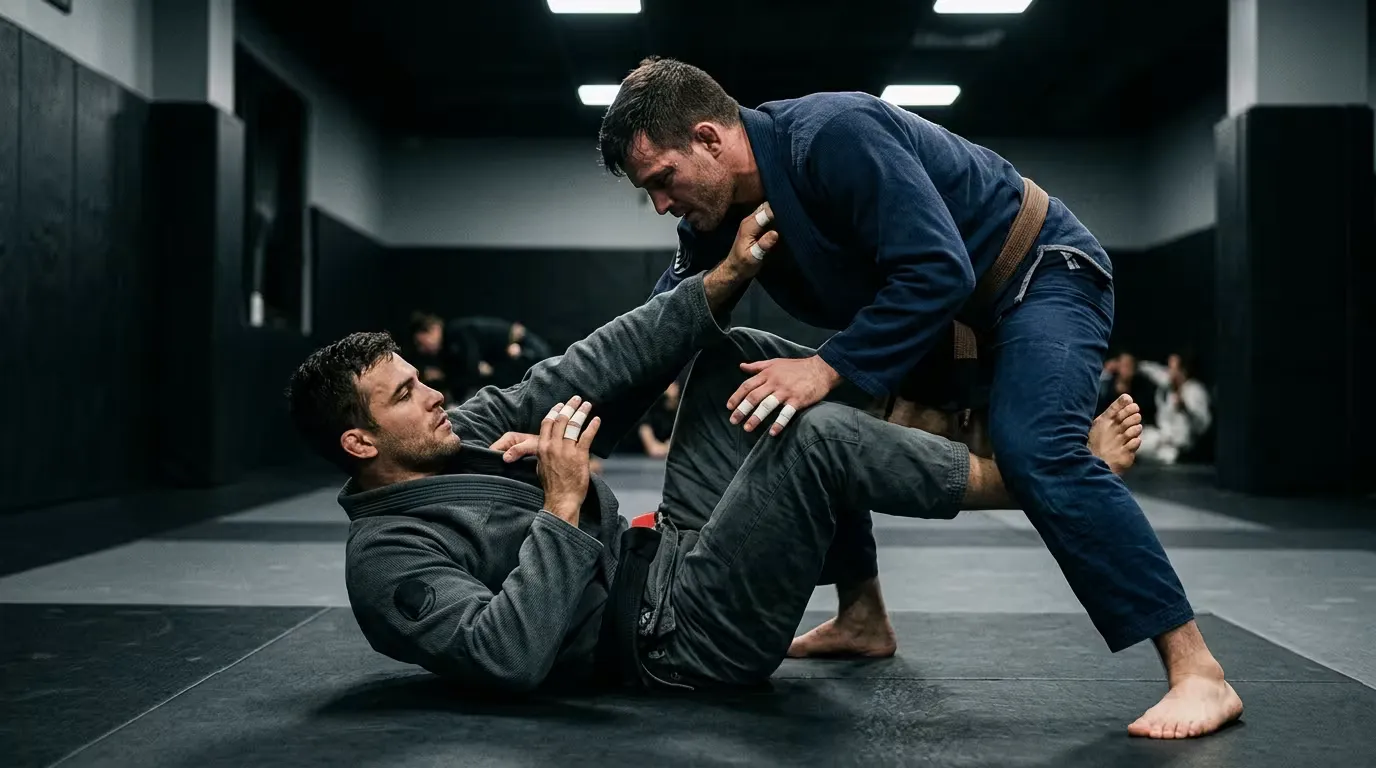
Science of Stillness: Isometric Guard Retention Research for BJJ
Guard retention in Brazilian Jiu-Jitsu is usually taught through movement, angles, and timing. Biomechanical and performance profiling data suggest another key layer: isometric strength.
When an opponent starts to pass, many defensive moments rely on holding structure under load before you move. This is especially true in open guard, half guard recovery, and inversion-based retention.
In these phases, the defender must maintain frames, hooks, and hip positioning while resisting pressure. That is classic isometric output; muscles generate force without obvious movement.
Research on BJJ athletes consistently shows that experienced grapplers demonstrate stronger trunk stability, grip endurance, and static strength than less experienced athletes (Andreato et al., 2017; Ovretveit et al., 2018). Those qualities map directly to retention quality.
This article pairs well with BJJ Nervous System Training and Flow State Training in BJJ if you want the broader performance context.
What Is Isometric Guard Retention?
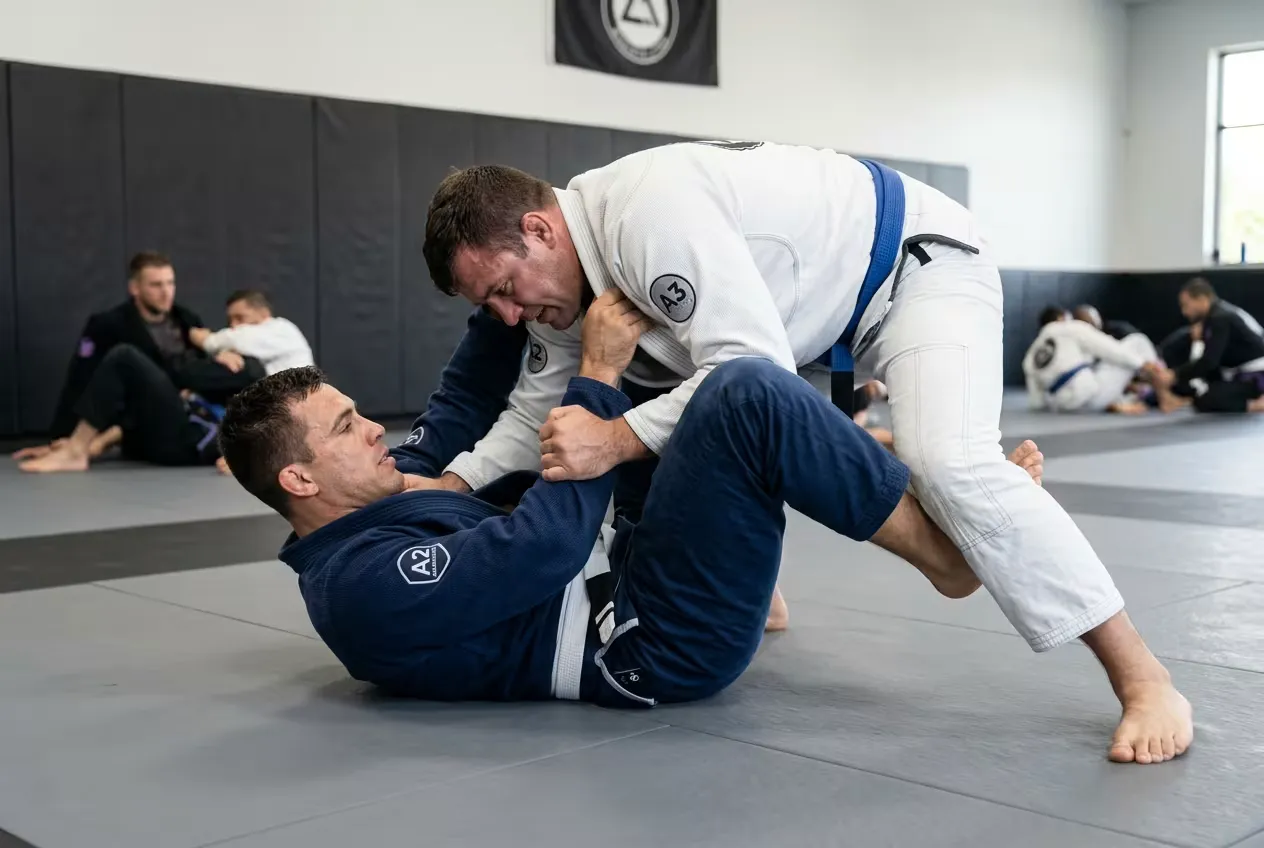
Isometric guard retention is the ability to maintain defensive structure under pressure without collapsing.
Instead of moving continuously, the defender uses controlled tension to block advancement and create time.
Common examples:
- holding knee-to-chest structure against a body lock pass
- maintaining inside frames during over-under pressure
- sustaining hip elevation while defending pressure passes
- locking hooks during leg-drag defense
In each case, the immediate objective is structural resistance first, then movement once control is reestablished.
Research on Isometric Strength in Grappling
Strength and conditioning data on BJJ athletes consistently show that elite competitors outperform novices in isometric grip and trunk endurance metrics.
Andreato et al. (2017) reported higher-level athletes displaying superior handgrip strength, core stability, and muscular endurance. These attributes are directly relevant to maintaining defensive positions under load.
Performance analysis work in Sports (Basel) also highlights frequent short static tension phases during positional battles (James et al., 2014). Unlike striking sports, grappling often requires force production while resisting an opponent’s bodyweight.
Combined, these findings support a simple conclusion: isometric endurance is highly specific to BJJ retention performance.
Why Isometrics Matter for Guard Retention
During pass defense, athletes often need to resist force before initiating movement. If structure collapses early, recovery options shrink fast.
Key benefits:
- improved frame stability under pressure
- lower energy cost compared with constant defensive scrambling
- better joint alignment in high-load retention positions
- more time to recover angles and recompose guard
This is one reason high-level retention often looks calm and efficient rather than frantic.
Key Muscle Groups for Isometric Guard Retention
Guard retention depends on coordinated tension across several regions:
- hip flexors: maintain knee positioning and distance control
- adductors: clamp hooks and resist leg pummeling
- core stabilizers: protect spinal alignment under flattening pressure
- obliques: support rotational resistance during leg drags
- grip complex: maintain sleeve, collar, or wrist control in gi exchanges
If one link in this chain fails, structure tends to collapse under pressure.
Isometric vs Dynamic Retention
Dynamic retention is movement-dominant; isometric retention is structure-dominant.
You need both, but they solve different problems:
- dynamic retention: recover angles, invert, and re-pummel
- isometric retention: stop forward pressure long enough to create options
The common high-level sequence is: hold first, move second. This is usually more energy efficient and less chaotic.
Practical Isometric Drills for Guard Retention
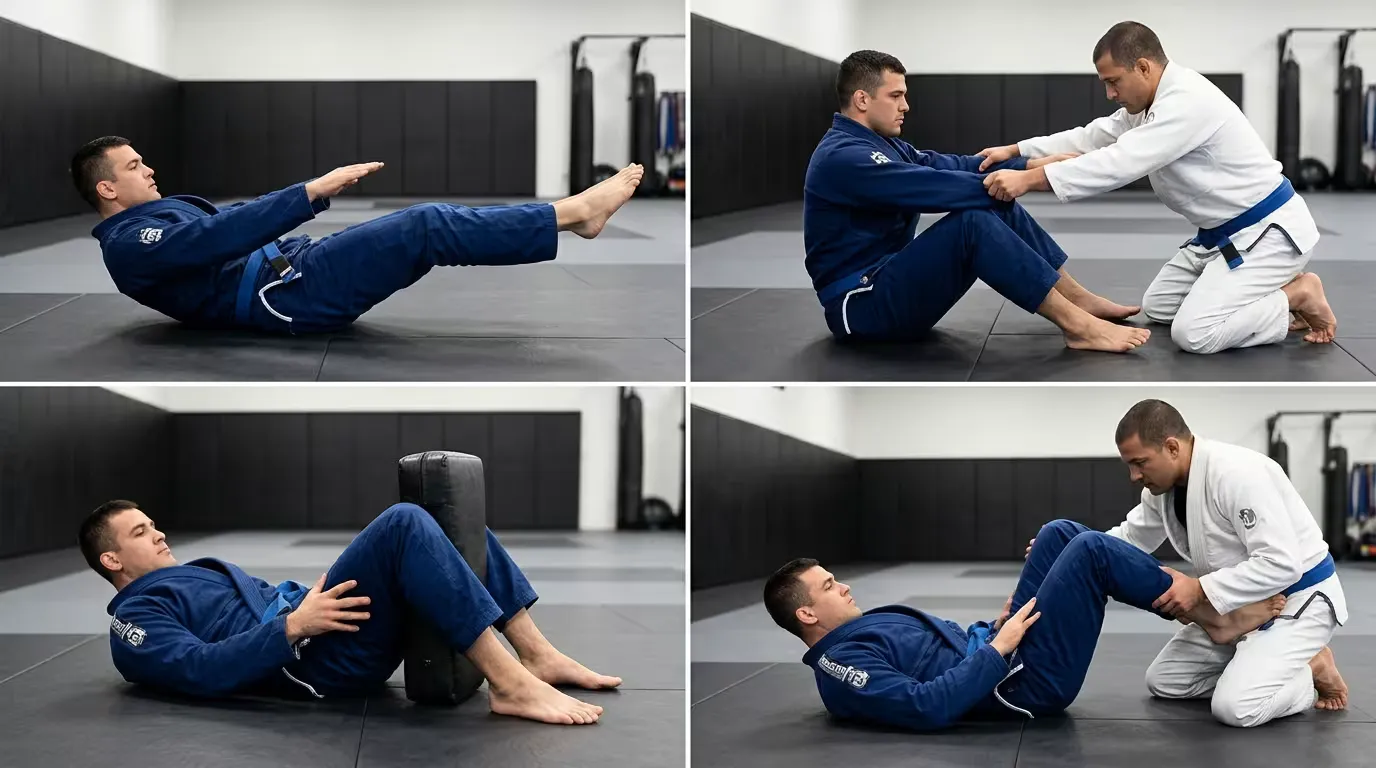
The drills below are formatted as TapFlow-style cards so you can quickly screenshot, share, or plug them into sessions.
1) Hollow Body Hold
Purpose: improve core stiffness and hip position control.
- lie on your back
- lift shoulders and legs slightly from the mat
- keep lower back connected to the floor
- hold 20 seconds
This mimics the tension needed to keep knees between you and the passer.
2) Seated Guard Frame Hold
Purpose: improve frame integrity under forward pressure.
- sit upright with knees bent
- partner applies forward pressure
- maintain forearm frames without collapse
- hold 15 to 30 seconds
This directly maps to body lock defense phases.
3) Adductor Guard Squeeze
Purpose: strengthen hook retention.
- place a pad or medicine ball between knees
- squeeze while maintaining hip elevation
- hold 20 seconds
This improves hook control in butterfly-style exchanges.
4) Hip Flexor Retention Hold
Purpose: improve knee-to-chest retention under stack pressure.
- pull knees toward chest
- partner attempts to press legs down
- resist without extending hips
- hold 15 seconds
This is highly transferable to stack-pass defense.
Recommended Hold Duration
A strong practical range is 10 to 30 seconds, which closely reflects many real guard passing exchanges (James et al., 2014).
Simple structure:
- 3 to 5 sets per drill
- 15 to 25 second holds
- 30 to 60 seconds rest
This maintains transfer-specific intensity without unnecessary fatigue.
If you want to organize this with minimal friction, use the TapFlow BJJ timer app to preset hold-rest blocks.
Injury Prevention Benefits
Isometric training can improve joint stability with lower movement stress compared with high-velocity loading.
In retention contexts this is useful for:
- knee stability in guard phases
- hip control during inversion and pummeling
- shoulder integrity during sustained framing
Because isometrics reduce rapid eccentric stress, they can help build tendon resilience while managing high training volume.
Integrating Isometrics Into Weekly BJJ Training
A simple weekly structure:
Before class
- hollow body hold
- hip flexor retention hold
After class
- partner frame hold
- adductor squeeze hold
Total time is usually 8 to 10 minutes. It is enough to build position-specific strength without disrupting technical work.
Common Mistakes in Isometric Training
- holding your breath; use controlled nasal breathing
- over-tensioning every hold and burning out too early
- using postures that do not match actual guard positions
- running hold times too long and losing sport-specific intensity
When programmed correctly, isometric retention work turns guard defense into a more stable, less reactive skill set.
Conclusion
Isometric guard retention is a practical performance lever in BJJ.
Movement still matters, but structure is what buys you the time to move well. If you can hold frames, hooks, and hip position under pressure, your retention gets cleaner, calmer, and more efficient.
Pair this with your dynamic drills, then connect it with mental skills training for BJJ and nervous system resilience work for better transfer in live rounds.