

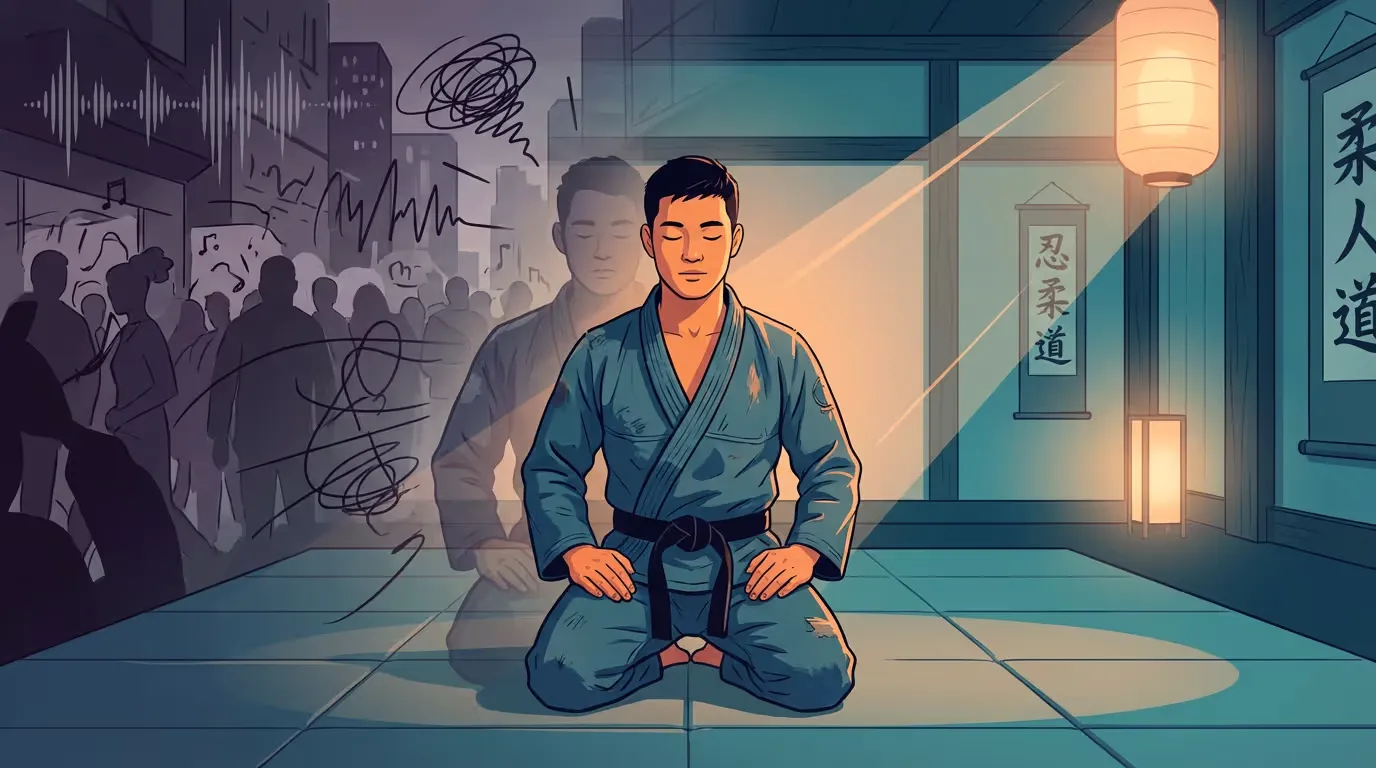
More Than a Martial Art: Why BJJ Can Support PTSD Recovery
For many veterans, police officers, paramedics, and first responders, stress does not end when the shift ends. The body can stay activated for hours, sometimes years.
That is why PTSD and chronic occupational stress are not only about memory. They are also about physiology: sleep disruption, hypervigilance, startle sensitivity, and a nervous system that struggles to downshift.
Therapy is critical. At the same time, many people also need structured body-based training that helps them relearn regulation under pressure.
Brazilian Jiu-Jitsu can be a useful complementary tool in that process.
PTSD and Occupational Stress Through a Nervous-System Lens
Common stress-pattern markers include:
- persistent threat scanning
- elevated baseline arousal
- reduced recovery between stress events
- emotional reactivity under pressure
In practical terms, this looks like a system that is excellent at survival and weak at recovery.
Recovery work needs both: cognitive processing and autonomic retraining.
Why BJJ Is Different From Random Stress
BJJ introduces pressure in a controlled format:
- consent-based training
- clear safety rules
- tap-out control
- predictable rounds
- instructor supervision
That distinction matters. The body experiences stress, but the environment stays structured and bounded.
Over time, repeated rounds can teach a crucial lesson: activation is not the same thing as danger.
Polyvagal Framing: From Hyperarousal to Regulation
A useful model here is polyvagal theory, which describes different autonomic states tied to safety, mobilization, and shutdown.
In BJJ, athletes repeatedly enter high arousal states while practicing:
- deliberate breathing
- tactical decision-making
- emotional control under contact
- return-to-calm between rounds
If you want a practical companion to this idea, read BJJ Nervous System Training: Stress Resilience on the Mats.
What the Research Suggests
Emerging research is still early, but findings are directionally meaningful.
- Structured BJJ training in service members and veterans has been associated with reductions in PTSD symptom severity and related distress markers (Willing et al., 2019).
- Community-based BJJ participation has been associated with improved mood, empowerment, and psychological well-being (Ruelas et al., 2025).
- Law-enforcement-focused studies suggest better control in physical encounters and fewer injury-linked escalations in trained populations (Rogers et al., 2021).
None of this means BJJ replaces treatment. It means BJJ can function as a complementary embodied intervention when implemented responsibly.
BJJ as Exposure Training in Motion
Exposure works when stress is reintroduced safely and avoidance is reduced.
BJJ provides repeated cycles of:
- stress contact
- tactical adaptation
- recovery reset
That repetition can rebuild confidence in three ways:
- stress is tolerable
- control can be regained
- recovery is trainable
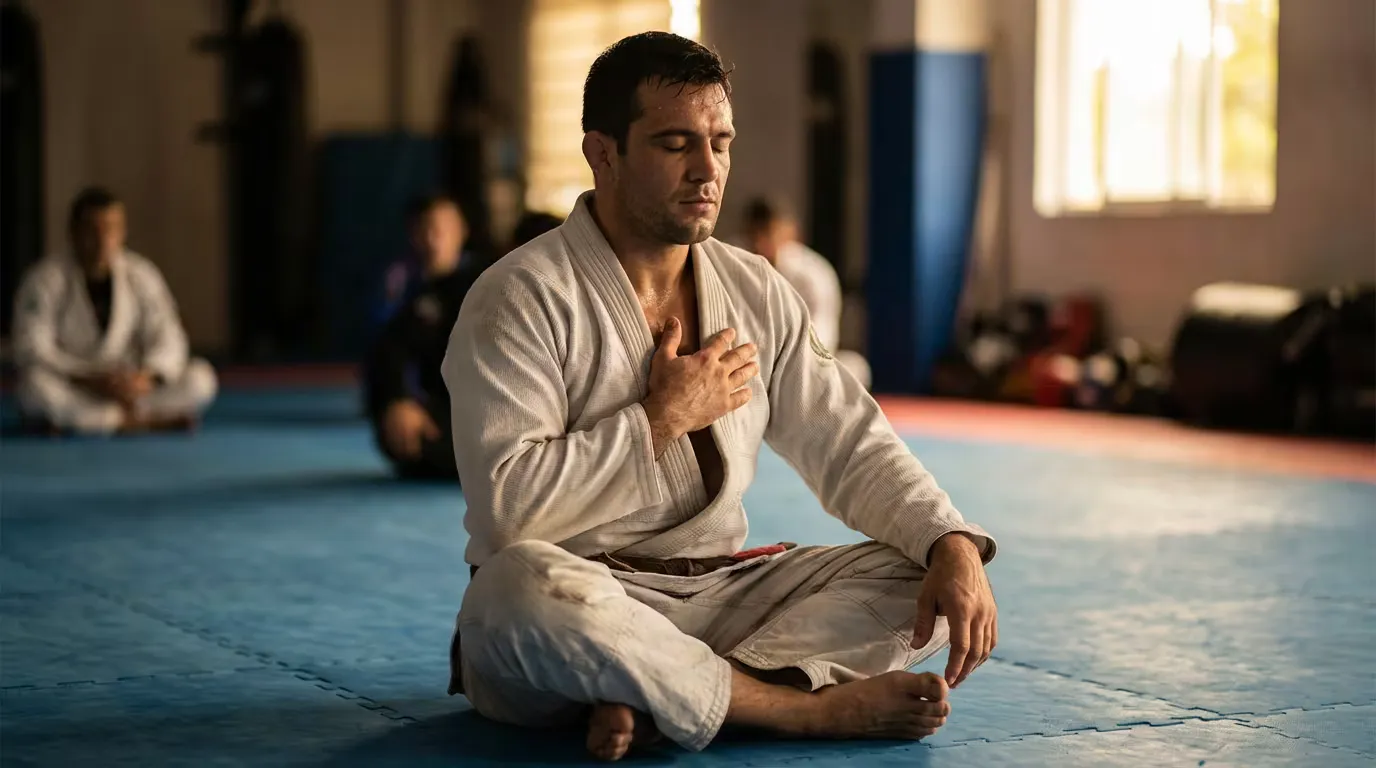
Why This Matters for Tactical Professions
In high-risk jobs, one hidden cost is chronic uncertainty.
When practitioners improve technical control under pressure, uncertainty tends to drop. When uncertainty drops, panic-driven reactions often drop with it.
That is one reason BJJ can be relevant for occupational stress resilience, not just martial competence.
Practical Guidelines for Safe Use
If you are using BJJ as part of stress-recovery work:
- choose a gym culture that values safety over ego
- tell your coach your boundaries and triggers
- start with fundamentals and positional drills
- pace exposure gradually
- prioritize breath and composure over winning rounds
- continue licensed mental health care in parallel
A simple way to structure this is with pre-planned rounds and recovery blocks. If useful, see TapFlow BJJ timer app for building repeatable sessions.
Frequently Asked Questions
Can BJJ trigger PTSD symptoms?
It can for some people, especially in close-contact positions. A supportive gym, clear boundaries, and the ability to tap out immediately are essential.
How long before benefits appear?
Timelines vary, but consistent structured training over multiple weeks is usually needed before stress-regulation improvements feel reliable.
Is BJJ a replacement for therapy or medical care?
No. It should be treated as a complementary practice alongside qualified mental health care, not a replacement.
Why can BJJ help with occupational stress in tactical jobs?
It combines controlled pressure, decision-making under load, and post-round recovery, which trains both technical and nervous-system resilience.
Conclusion
BJJ does not erase trauma. It can, however, provide a structured training environment where people practice remaining functional under pressure and returning to calm afterward.
For veterans and first responders living in chronic activation, that shift from survival mode toward regulated performance can be significant.
Used with professional care and good coaching, BJJ becomes more than a combat sport. It becomes a practical resilience protocol.