

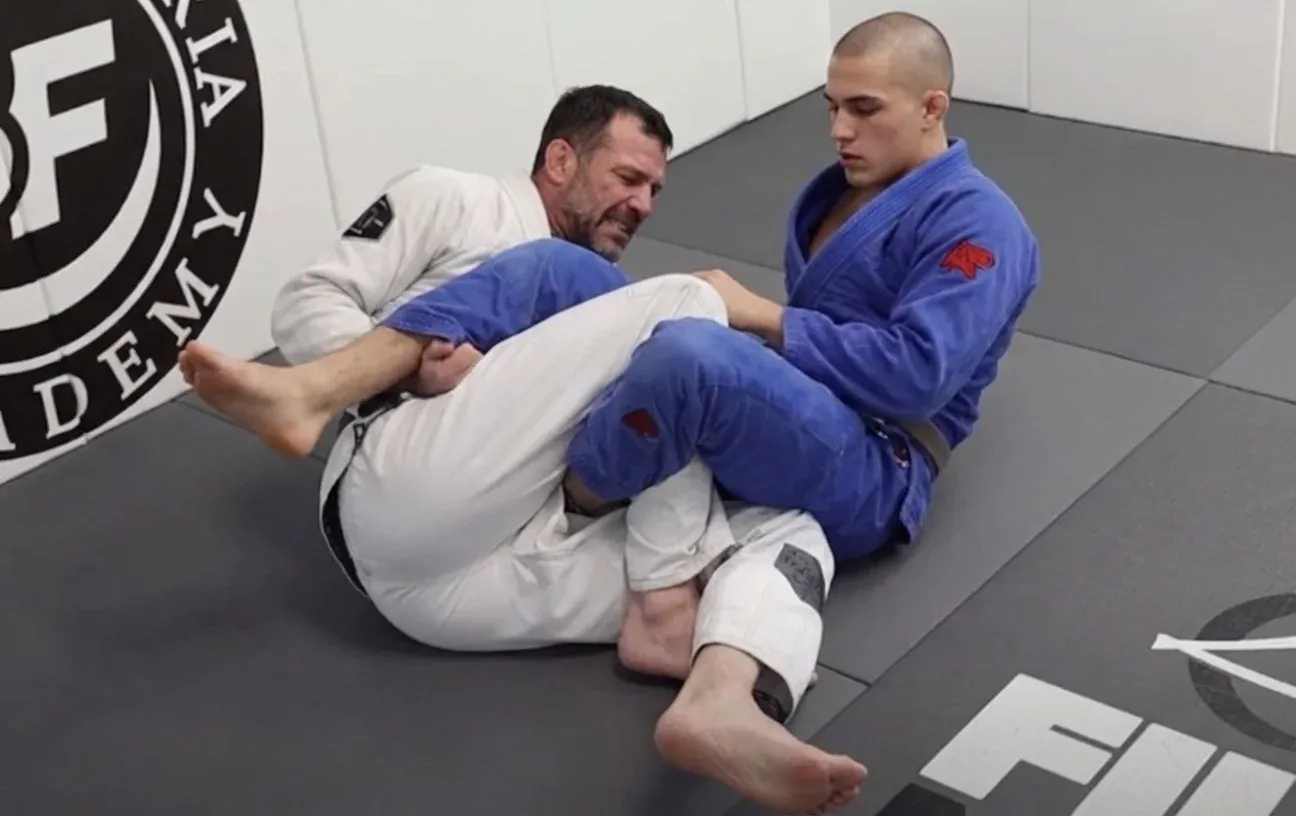
The “pop” you never want to hear
It usually starts as a mild annoyance in the calf. You think it’s just a slicer, a pain compliance hold you can grit your teeth through to pass the guard.
You tell yourself, “I can eat this.” Then, there’s a distinct pop, followed by that sickening feeling of your knee losing its structural integrity.
That is the risk profile people worry about with the Bear Trap.
If you’ve been tracking the Jiu-Jitsu meta following the recent ADCC cycle, you’ve likely noticed a disturbing trend. Search volume for “Felipe Pena Bear Trap” and “countering the bear trap” is spiking.
Why? Because elite grapplers are realizing this position is not a quirky variation of a back-take. It can create serious knee risk when the defender scrambles late or the attacker applies force carelessly.
We need to have a serious, practical discussion about this asymmetric guard configuration. It sits at the intersection of high-level innovation and avoidable injury risk.
Here is the deep dive into the mechanics of the hold, why it’s sparking controversy in training rooms, and how you can drill the escape without needing an MRI afterward.
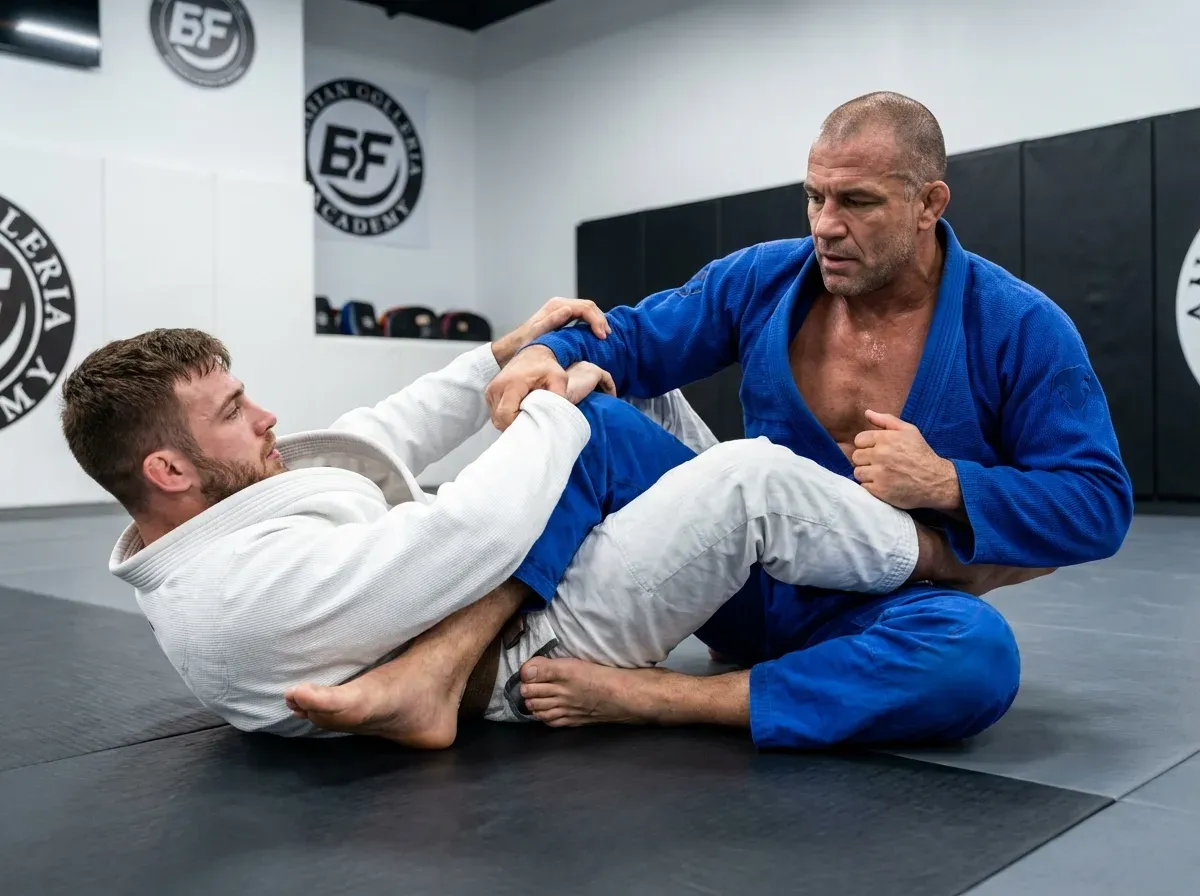
The deception: why it breaks before it hurts
The fundamental danger of the Bear Trap lies in its disguise. It masquerades as a simple calf slicer.
When your opponent weaves their leg through yours and triangulates behind your knee, the initial sensation is compression of the gastrocnemius muscle against the tibia. That’s just pain. And grapplers, especially adrenaline-fueled competitors, are terrible at respecting pain.
But here is the kinetic reality: underneath the surface, there is massive rotative torque. When the attacker engages their posterior chain (specifically driving the hips forward while anchoring the foot), the pressure can move beyond muscle compression and create a fulcrum that attacks the knee joint laterally.
It creates a shearing force similar to a heel hook, but with the tibia trapped in place by the slicer mechanic. It creates a “binary break” scenario: you feel fine, until the millisecond you are absolutely not.
The ADCC effect: weaponizing the scramble
Felipe Pena has weaponized this position to devastating effect. In recent competition cycles, we saw the Bear Trap used as both a submission threat and a transitional control hub to sweep heavyweights.
This is where the danger peaks.
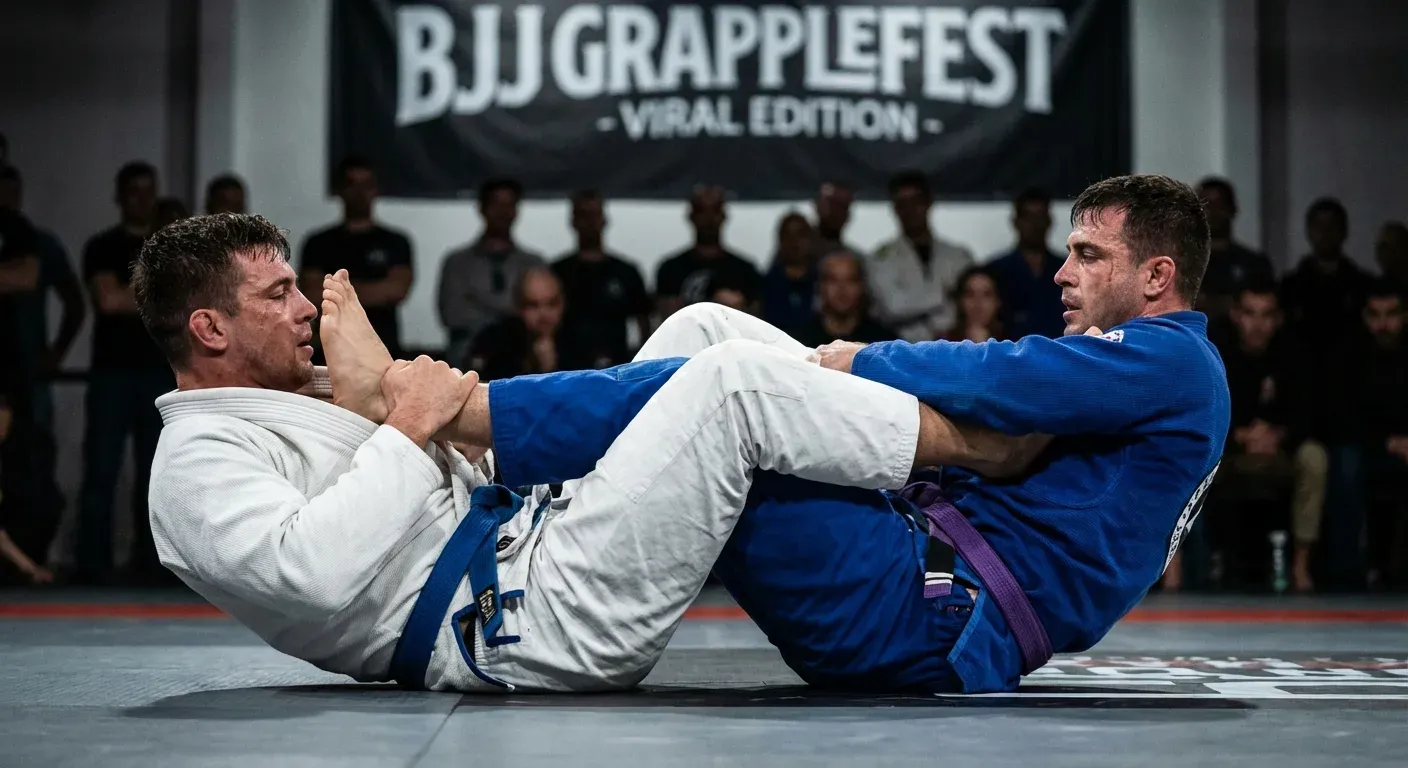
BJJ injury studies repeatedly identify the knee as a common injury site, with meniscus and ligament injuries appearing often in survey data. In positions like the Bear Trap, that risk feels highest during the explosive escape attempt.
Imagine the scenario: The attacker has secured the lever (your lower leg).
As you, the defender, explode to back-step or knee-cut out of the entanglement, the kinetic energy of your own body weight works against you.
It’s a classic case of an immovable object (the trap) meeting an unstoppable force (your scramble).
The knee joint becomes the casualty.
The drilling dilemma: proprioception over power
This brings us to the critical problem for the average practitioner: How do you learn this without hurting your partners?
You cannot spar the Bear Trap at 100% intensity. If you wait for the tap, damage has likely already occurred. Conversely, if you tap too early, you never learn the late-stage escapability required for competition.
To navigate this, we must shift our training modality from “sparring to win” to Constraint-Led Drilling. You need to isolate the specific moment of entry: the quarter-second where the leg weave occurs but the hips have not engaged yet.
This is where the battle is won or lost. Once the hips are elevated and the triangle is locked, you are fighting physics, and physics always wins.
The solution: rewiring your reactions with TapFlow
The answer lies in high-frequency, low-resistance repetition of the recognition phase. You need to rewire your neural pathways to recognize the Bear Trap entry not as a position to hold, but as a trigger to immediately off-balance the attacker. This kind of recognition under pressure ties into mental skills and how your brain predicts moves in guard passing.
This is where TapFlow BJJ can help with structure.
Most training mistakes happen because the room goes from explanation to live chaos too quickly. TapFlow lets you time the safer middle ground: short, repeatable recognition rounds that build defensive proprioception without turning every rep into a scramble.
With TapFlow, you can structure flow rolls specifically designed to navigate dangerous waters like the Bear Trap safely.
Staying calm under dangerous positions is a skill. Nervous system training helps you recognize and escape without panic.
The goal is not to avoid the meta; it is to survive it. Don’t let your meniscus be the price of your education. Use TapFlow BJJ to systematize your safety.