

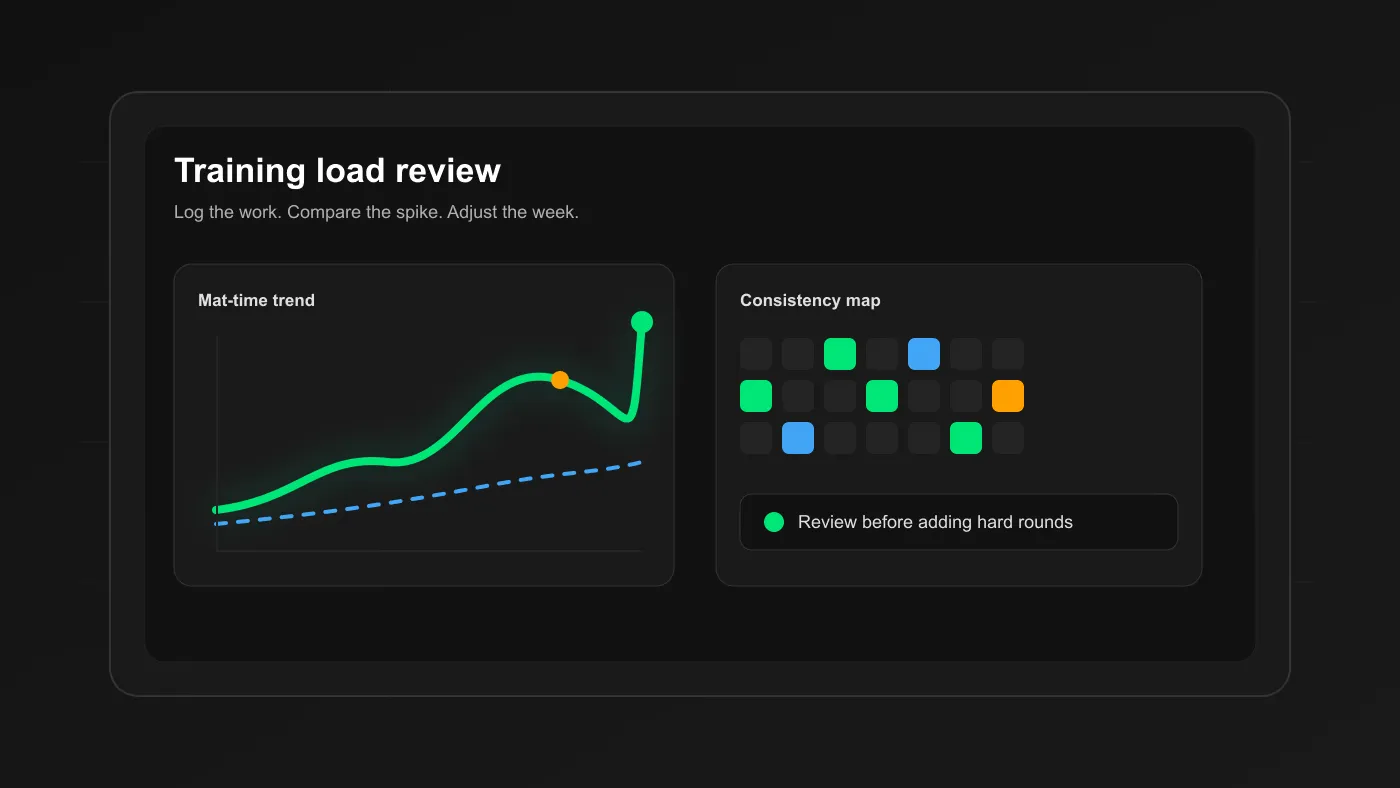
The longevity problem in BJJ
Brazilian Jiu-Jitsu makes it easy to confuse toughness with durability. You can feel mentally ready for another hard round while your elbows, knees, neck, and lower back are still adapting to last week’s work.
That is where training logs help. Not because a log can predict the future, but because it gives you a cleaner memory than your ego does.
If you are returning after a layoff, adding extra open mats, or pairing BJJ with hard lifting, the key question is simple: did your recent workload jump faster than your body was prepared for?
For the broader recovery context, pair this with BJJ injury prevention and recovery and nervous system resilience.
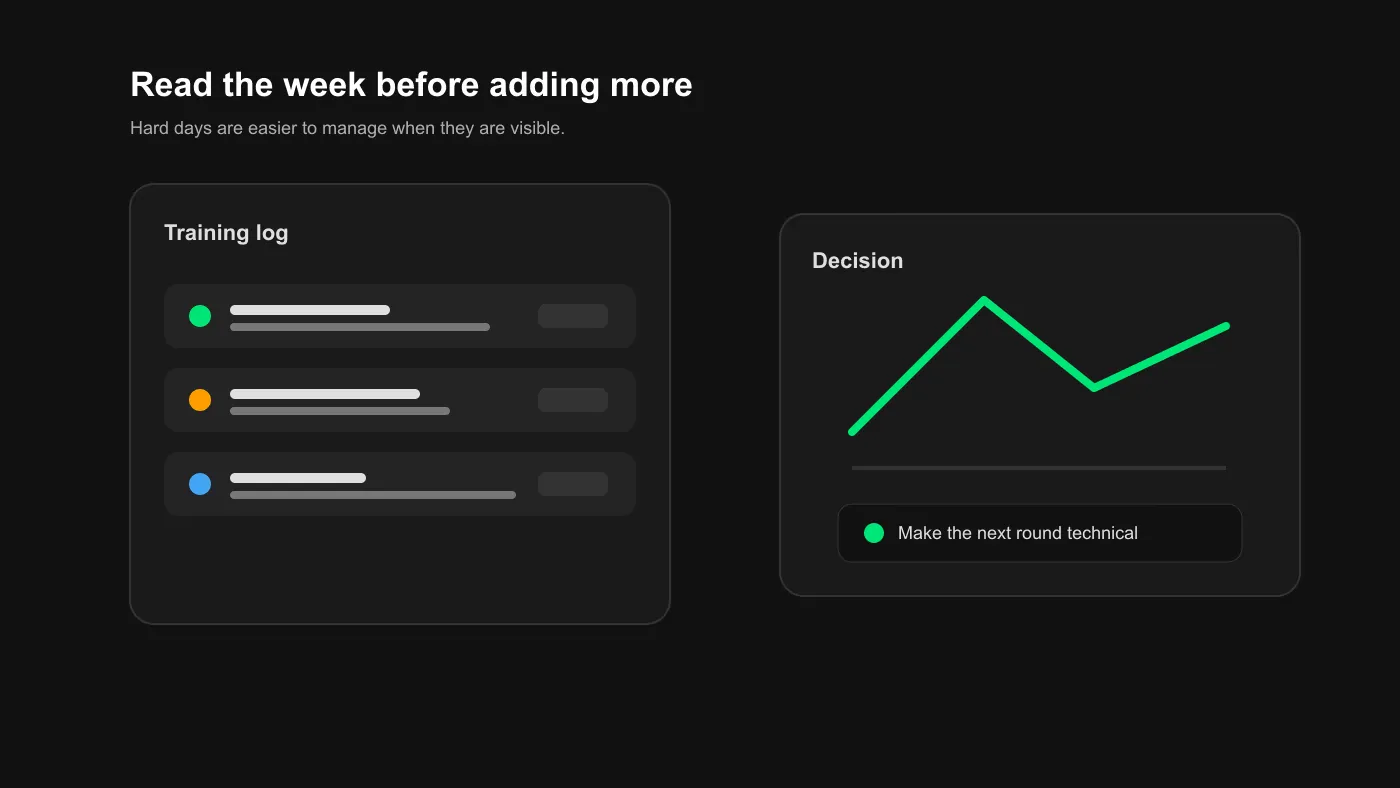
What ACWR actually means
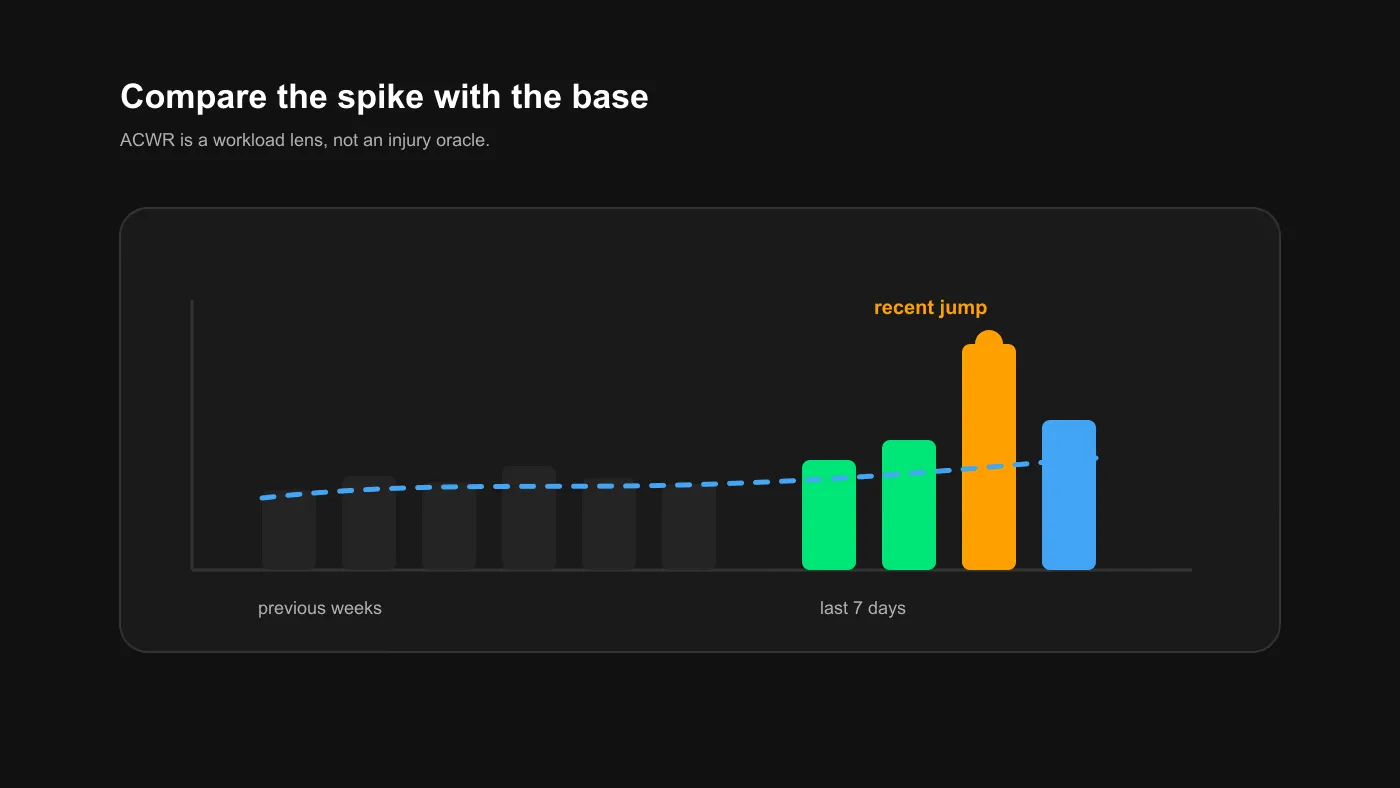
The Acute-to-Chronic Workload Ratio (ACWR) compares recent work with the training base you have built over the previous few weeks.
- Acute load: commonly the last 7 days of training load
- Chronic load: commonly an average from the previous 3 to 6 weeks
In simple terms, ACWR asks whether this week is wildly larger than the work your body has been handling lately.
Many coaches use duration multiplied by session RPE as a rough load score. A 60-minute easy drilling session and a 60-minute shark-tank round should not be treated as identical stress.
For BJJ, though, ACWR should stay humble. Most ACWR research comes from field and team sports, not grappling. Reviews show mixed findings, and critics have raised serious concerns about using a ratio as a causal injury prediction tool. So do not treat 0.8, 1.3, or 1.5 as magic numbers.
The useful lesson is narrower: large jumps in recent work deserve attention, especially when they include hard rounds, competition prep, sleep debt, or new positions that stress joints differently.
What TapFlow tracks today
TapFlow is not an ACWR calculator. It does not calculate session RPE, tissue capacity, monotony, strain, or injury risk.
What TapFlow does track is the training history that makes better workload decisions possible:
- completed timer sessions
- manual training logs
- session dates and duration
- linked drills and moves
- recently used and favorite timers
- most used drills and timers
- total time trained across week, month, year, and lifetime views
- a calendar-style heatmap for consistency
That is the practical foundation most grapplers are missing. If your log shows three hard nights in a row, a big jump in monthly mat time, or a sudden return to long rounds after time off, you have evidence for a smarter adjustment.
Use TapFlow to keep the mat-time record clean. If you want ACWR-style calculations, export the idea to a spreadsheet: combine your TapFlow duration history with your own RPE notes and compare recent weeks against the previous month.
For session structure, start with the BJJ training timer and class structure guide or build lower-impact work from solo drills for mat endurance.
Three workload signals worth watching
1. Weekly mat time
The simplest signal is still useful. If you usually train 3 hours per week and suddenly train 7, that is a real spike even before you add intensity.
TapFlow’s training-time views help you see whether your week, month, or year is drifting upward gradually or jumping abruptly.
2. Hard-day clustering
Two hours of technical drilling is different from two hours of competitive rolling. TapFlow does not score RPE automatically, so add your own short note or keep a lightweight spreadsheet if intensity matters to the decision.
The behavior to catch is clustering: hard sparring Monday, hard sparring Tuesday, leg locks Wednesday, open mat Thursday. The problem is often not one brutal session. It is too many demanding sessions before recovery catches up.
3. Skill and position exposure
BJJ load is not only time. A week of guard retention, wrestling up, or leg entanglement entries stresses the body differently from a week of relaxed flow rolling.
Because TapFlow can connect sessions with drills and moves, you can look back and notice patterns. If your knee feels irritated after a month of saddle entries or your neck feels cooked after heavy passing rounds, your log gives you a trail to inspect.
When load spikes meet risky positions, education matters too. If you train leg entanglements, read the Bear Trap mechanics and escape guide and keep the intensity appropriate.
A simple TapFlow longevity routine
Use this weekly rhythm:
- Log every session, even the casual ones.
- Check total mat time at the end of the week.
- Compare this week with the previous few weeks.
- Notice whether hard days stacked together.
- Plan one technical or recovery-focused session before adding another hard one.
This is not medical screening. It is a decision habit.
If you are injured, in persistent pain, or returning from surgery, work with a qualified clinician or coach. A training log can support that conversation, but it cannot diagnose anything.
Conclusion: stay on the mats by remembering accurately
The durable grappler is not the person who ignores every warning sign. It is the person who notices patterns early enough to adjust.
ACWR gives you one possible lens for thinking about spikes, but it should not be treated as a BJJ injury oracle. The more dependable habit is honest logging: how often you trained, how long, what you practiced, and whether the hard work was actually recoverable.
TapFlow helps with that foundation. Keep the record clean, review your trends, and make the next session fit the body you have today.